


Derzeitige Tätigkeit:
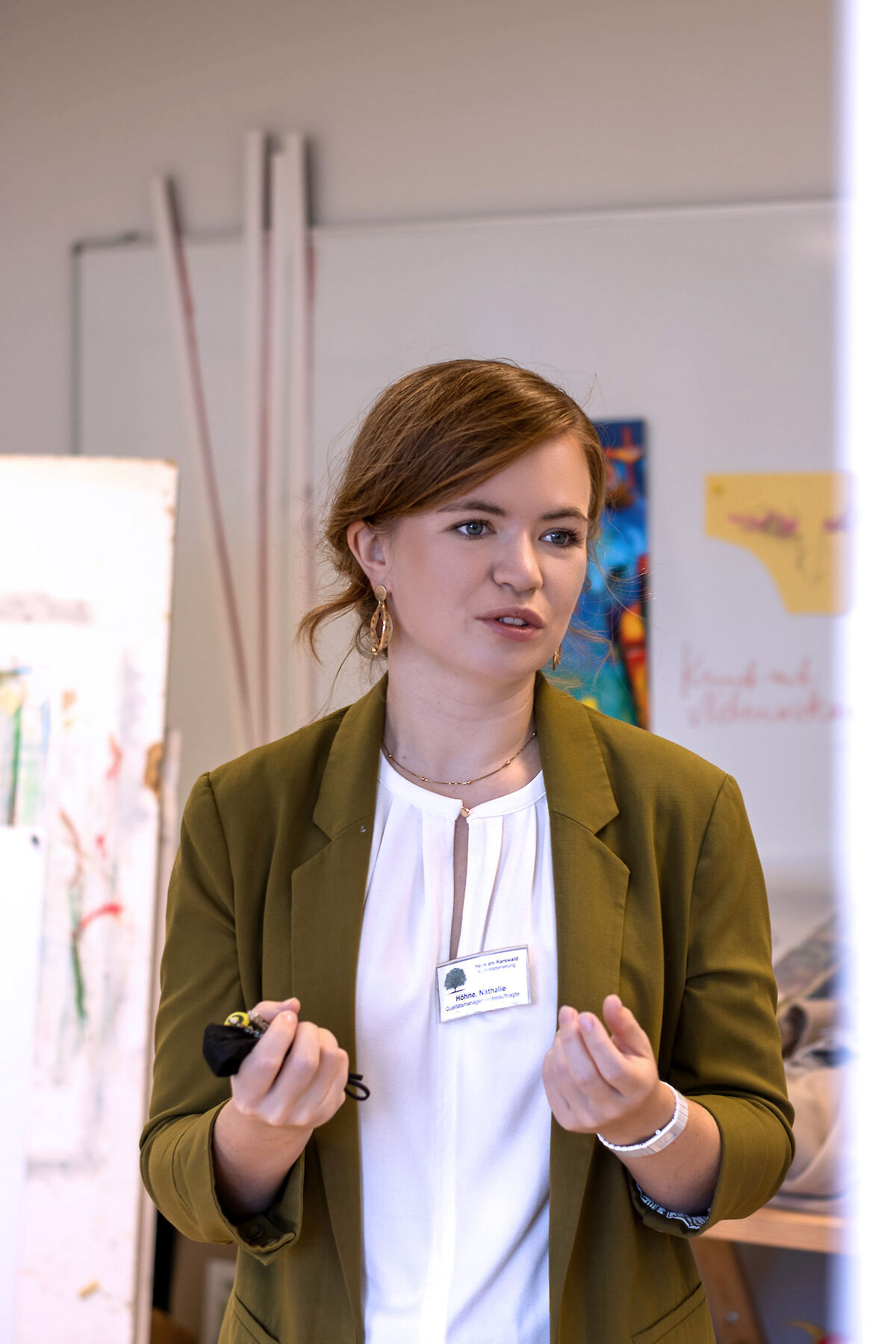
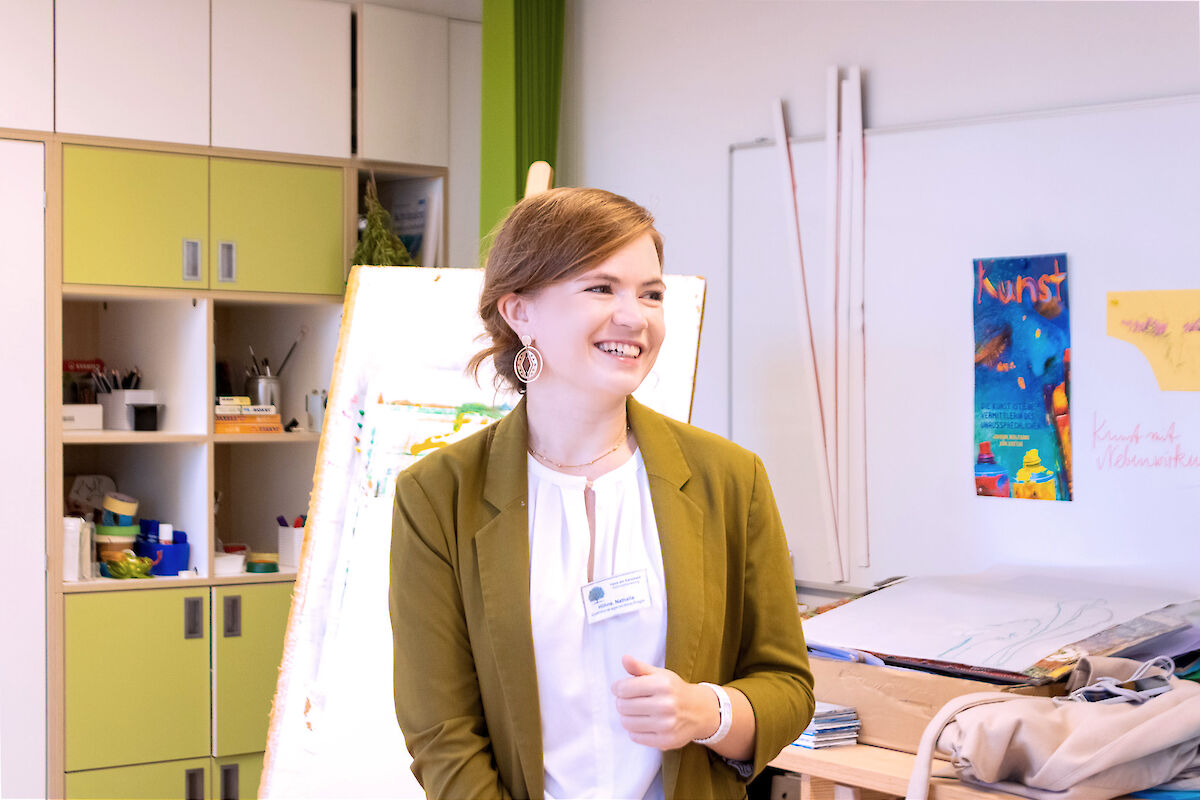
Sozialpädagogin im Haus am Karswald

After completing your studies, you started working as a social education worker at Haus am Karswald. What aspect of your job inspires you the most?
I particularly like the diversity of my work. Since I started working here, I have been able to expand my knowledge considerably. Working with people with chronic mental illness and people with intellectual disabilities is very individual. Every day, you have to engage with new clients, notice changes and support them. People are always at the centre of my professional activities.
Did you imagine yourself doing this kind of work when you started your studies? Did you know from the outset what field you wanted to work in?
I knew from the beginning of my studies that I didn't want to work in child and youth welfare and that I would like to work with people with disabilities at some point, possibly with animal-assisted therapy. I didn't expect to achieve exactly that right after graduating.
Did you have to acquire additional skills after starting your job? You mentioned sewing, for example. Did you already know how to do that?
Yes, I had to learn a lot of technical content, as we hardly covered the topic of "integration assistance" during my studies and it is now a main focus of my work. I took part in many training courses and conferences on the topic of integration assistance/the Federal Participation Act.
I was also familiar with the topic of animal-assisted intervention before I started my job, but it was only here that I really looked into it in depth and learned many things I didn't know before. Without my additional qualification as an "animal-assisted intervention specialist", I wouldn't be able to work so professionally today.
For example, I already knew how to sew before I was employed here; it is a big hobby of mine and I am grateful to be able to use it with residents here as part of my work.
What were your expectations of the course and were they met?
I didn't have high expectations of the programme. I had been looking for a place to study for a long time and only received confirmation of my place at the FHD a few weeks before the programme started. However, what convinced me to accept this place was the management component, as I had always imagined myself in a management position later on and I think it's important to learn the necessary skills in advance.
In your opinion, what qualities should someone have to study this subject?
A very high degree of empathy, the ability to work in a multi-professional team, and you have to be able to engage with a wide variety of people, as the spectrum of social work is very broad. You can work with everyone from small children to elderly people, people with disabilities, refugees... You should be at peace with yourself, because many issues will arise during your studies and in your future work that will affect you emotionally. It also requires a high degree of self-reflection on your own actions and the effect you have on others.
What is the most valuable experience from your time as a student?
The time I spent doing internships in different areas, which allowed me to make the connection between theory and practice. I
also gained many skills in my work on the student council, in terms of organising parties and celebrations and negotiating with different levels of management.
What did you enjoy most during your studies – which moments have stayed with you?
Of course, I remember the first day, the orientation event and getting to know the other students. On that day, I sat next to a young woman I didn't know, who is still a good friend today.
And of course, the most fun was the events we organised for the entire university in the student council, which gave us the chance to get to know students from other departments.
But the most useful aspects for my current work, and also the topics that I enjoyed most during my studies, were planning and conducting case consultations and case discussions. Or the practical exams, which we carried out either with fellow students or in a nursery.
I really enjoyed the fact that the course was very practical and that we regularly had contact with the "outside world".
Thank you very much for the interview, Nathalie, and good luck in your future career!


Derzeitige Tätigkeit:
Sozialpädagogin im Haus am Karswald