


Prof. Dipl.-Des. Mike Wolff
Kontakt
Campus Straßburger Platz | Raum 415
Tel +49 351 4445-463
m.wolff@fh-dresden.eu

Do you love being creative, enjoy designing visual content, and have an interest in design, media and digital trends? Then a degree in graphic design could be just the thing for you! But what do you need to study graphic design – and what should you prepare for?
In this article, we’ll show you what the key entry requirements are for the graphic design degree programme, what everyday life as a student is like, and why studying graphic design at Dresden University of Applied Sciences is particularly worthwhile. We’ll explain how the admissions process works and what opportunities a design degree can offer you.
You can find further information on the course page:
Graphic Design: Screen & Print Media
Whether it’s UI design, web design, editorial design or pre-press – the course provides you with practical knowledge in areas such as corporate design, motion design, prototyping and the use of tools like Adobe Creative Cloud or Figma. You’ll learn what lies behind key concepts such as typography, layout, colour theory and design principles.
Would you like to find out more about our degree programmes?
A graphic design degree equips you with the skills to create professional visual communication – from posters and websites to complete brand identities. You’ll learn how to bring ideas and messages to life in a creative and effective way. Unlike purely technical degree programmes, the focus here is strongly on the interplay between creativity, design, strategic thinking and working with new media. A design degree offers exciting development opportunities, particularly for students who have a flair for design and digital trends.
At the FHD in Dresden, the focus is on practical training, so you’ll be working on real projects right from the start. The course therefore combines creative freedom with professional standards – ideal for anyone who really wants to make a difference through design.


If you want to study graphic design, you should familiarise yourself with the formal and personal requirements in advance. Admission requirements may vary slightly depending on the university – but at the FHD, you’ll benefit from a particularly practical and supported course that specifically prepares you for the profession.
To study Graphic Design at the FHD, you generally need a general university entrance qualification, i.e. the A-levels or vocational A-levels. A specific minimum grade requirement (NC) is not decisive – for us, your creative talent counts more than your grades. Admission to the Graphic Design, Screen & Print Media programme is also possible without the Abitur. To this end, we invite you to sit an aptitude test. You can read more about this here.
A key component of your application is your artistic aptitude, which you demonstrate through a portfolio of work samples and often also in a personal interview or aptitude test. The portfolio is your chance to show what you’re made of – don’t worry, you don’t have to be a professional. But your imagination, your style, your talent and your eye for detail should be clearly evident. It may include both free-form work and design classics such as still lifes or portraits – the main thing is that they showcase your creative diversity.
As well as creative talent, you should also:
If you’re interested in studying graphic design, it’s particularly important that you actively engage with design – whether through your own drawing, photography or initial digital work. Your imagination and talent are crucial for your development in a creative environment.

Dresden University of Applied Sciences offers you a practice-oriented, creative and modern environment for your graphic design studies. Here, you will not only gain the theoretical foundation but also the practical skills needed to launch a successful career in the design industry. The programme concludes with the recognised Bachelor of Arts (B.A.) – a qualification that opens up a wide range of career paths.
The Graphic Design programme at the FHD covers a wide range of topics. These include:
These subjects provide you with the ideal preparation for the job market – whether you go on to work in an agency, a company or as a freelancer. Compared to other degree programmes in the field of design, the FHD’s approach stands out thanks to its intensive support, practical focus and strong links with the industry.
A particular highlight is the high proportion of practical work: even whilst studying, you’ll work on real-world projects – often with partners from business, culture or society. You’ll design brand identities, digital products such as websites or app designs, or develop print campaigns that meet real-world requirements. This allows you to build an impressive portfolio whilst still studying and prepare for a career in the creative world of design.
The FHD offers you modern studios, labs and workspaces where you can bring your ideas to life. Small seminar groups allow for intensive support from experienced lecturers with practical design experience. The creative atmosphere on campus ensures that you can develop your full potential and are well prepared for the demands of the design world.

Would you like to apply to study Graphic Design at the FHD? Here you can find out how the application process works – from the first steps right through to admission. You can also find all the key details about the process, as well as further information, directly on the course page or in the information material provided by Dresden University of Applied Sciences.
You can apply for the Graphic Design degree programme at any time of year, as there is no minimum entry grade and the admissions process is tailored to each individual. Important: Places are limited – the sooner you apply, the better.
Your portfolio is the centrepiece of your application. It should contain around 15–20 pieces of work that demonstrate your creative skills: drawings, collages, photographs, digital designs or mixed media – anything that suits your style is permitted. It is particularly important that your portfolio displays a recognisable style and personality.
In addition, you will be invited to an interview or an aptitude test. This is less about perfect technique and more about how you think, develop ideas and solve problems creatively.
At the FHD, you have the opportunity to take part in a free portfolio consultation. You’ll receive valuable feedback and tips on how to prepare your documents to the best of your ability. We place great emphasis on individual support and a fair selection process.
A degree in graphic design opens up many exciting career opportunities – especially if you study at a practice-oriented University of Applied Sciences such as the FHD. With your degree, you’ll be ideally prepared to launch your career in the creative industry.
Graduates can work in a wide variety of sectors, e.g.:
Your professional field ranges from traditional print design to web and app design, as well as animation, social media and brand management. Developing and designing promotional materials, creating corporate design web standards or visual concepts for digital brand identities are also among your potential responsibilities.
The Graphic Design: Screen & Print Media degree programme at the FHD, which leads to a Bachelor of Arts (B.A.), lays a solid foundation – after which you can specialise further, for example in the following areas:
Thanks to the practical projects during your studies, you’ll build a strong portfolio that opens many doors as you start your career – whether with agencies, companies, or through your own creative ventures in freelancing or starting your own business.
Many students opt for further study after completing their Bachelor’s degree, for example in Creative Direction (M.A.) – often leading to a Master of Arts (M.A.) qualification. Targeted further training and certificates, for example in digital tools, app design or project management, will also help you to develop your career in a focused way.
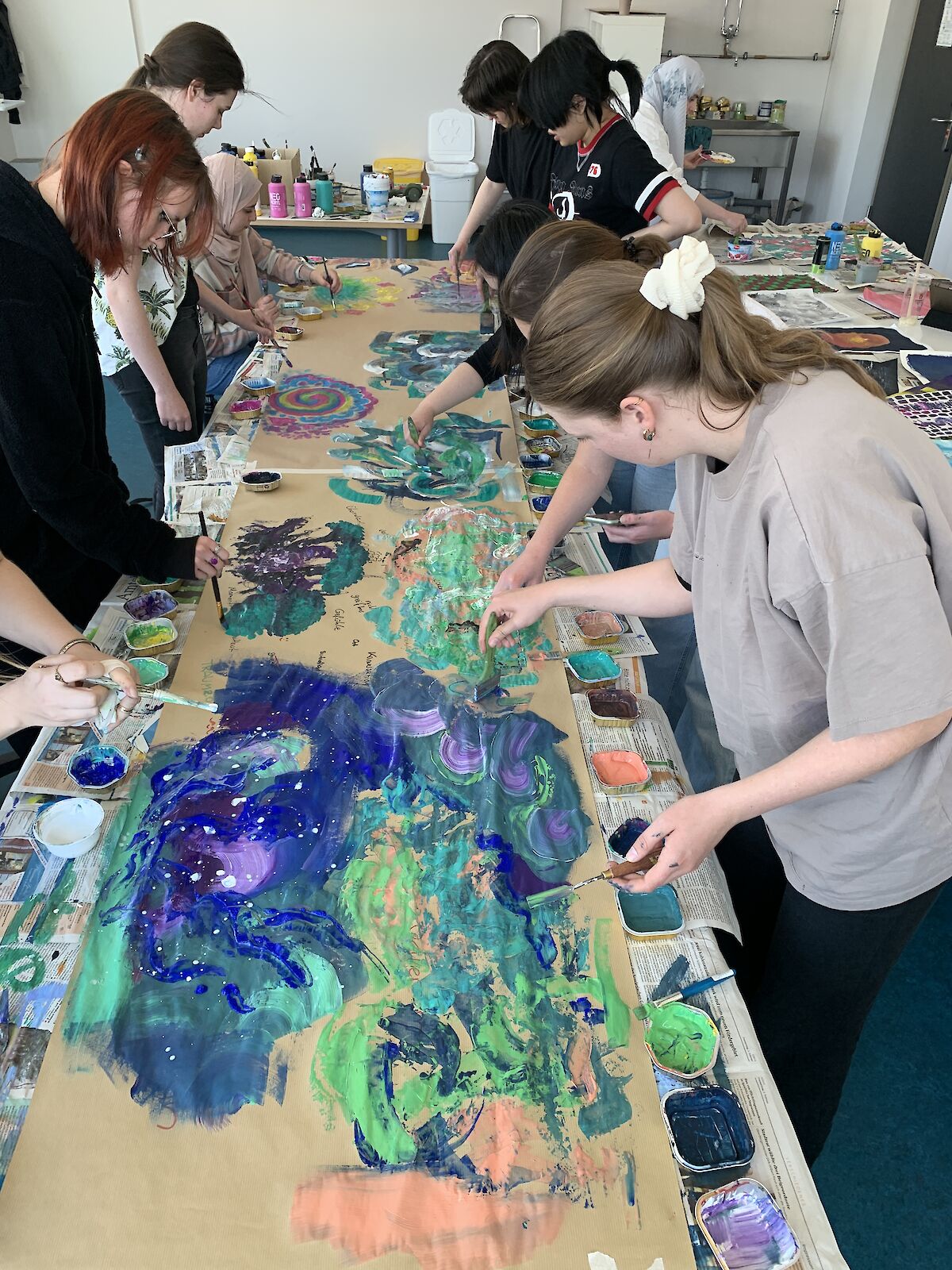

Studying graphic design sounds exciting – but is it really right for you? You should ask yourself this question honestly before applying. After all, graphic design is not just art in the traditional sense, but a form of visual communication that combines concept, technique and design. Whether you’re developing logos, advertising materials or digital designs – it always starts with a strong idea.
If you...
… then there’s a good chance that a degree in graphic design is right for you. At Dresden University of Applied Sciences, you can also study without a sixth-form qualification!
What you also need is a passion for design. Many projects during your studies involve intensive periods of work, during which you will constantly question and refine your ideas. Anyone who approaches this with enthusiasm will love exactly that – and in doing so lay the foundations for a professional future that can be not only creative but also financially attractive: depending on their role and industry, graphic design graduates earn between €2,500 and €3,800 gross per month.
Tip: You can gain valuable experience even before you start your degree – for example, through internships, online courses, your own projects or by creating your first design portfolio. This will help you quickly realise whether the work really suits you. Academies also often offer introductory courses or workshops that give you initial practical insights and prepare you perfectly for a degree in graphic design.
The Graphic Design for Screen & Print Media degree programme is just right for you if you have creativity, an interest in technology and a keen visual sense. At Dresden University of Applied Sciences (FHD), you can expect a practical, personalised course with strong support, modern facilities and a genuine link to the professional world.
The entry requirements for the Graphic Design programme are straightforward – your creative potential is far more important than your grades. With a well-prepared portfolio and a genuine interest in design, you’ve already got a lot going for you. Whether you want to work in agencies, companies or as a freelancer later on: at the FHD, you’ll lay the foundations for a creative career with a future.
Would you like to gather more information or compare your preferred degree programmes? Then why not add the Graphic Design degree at the FHD directly to your personal shortlist – and take a step closer to your dream of a creative career.
Now it’s up to you: shape your future in graphic design – at Dresden University of Applied Sciences.
Prof. Dipl.-Des. Mike Wolff
Kontakt
Campus Straßburger Platz | Raum 415
Tel +49 351 4445-463
m.wolff@fh-dresden.eu

Lina Kröber & Jasmin Kellermann
Kontakt
Campus Straßburger Platz | Raum 108
+49 351 44 45-444
studium@fh-dresden.eu