
study counselling
Lina Kröber & Jasmin Kellermann
Kontakt
Campus Straßburger Platz | Raum 108
+49 351 44 45-444
studium@fh-dresden.eu

Society is changing. People are living longer. Lifestyles are becoming more diverse. And right at the heart of it all, we need people like you – people who don’t just accompany others, but actively shape, support and develop new solutions.
Demographic trends are no longer just abstract statistics – they affect you directly in your everyday life, in the workplace and in social interactions. An ageing population, new family structures and growing social challenges clearly show that the demand for qualified professionals in the social sector is constantly rising. This is precisely where social pedagogy and social management come in. They give you the opportunity to respond to social changes – whilst at the same time building a secure and meaningful career path.
Dresden University of Applied Sciences (FHD) provides you with targeted support in this regard. With forward-looking degree programmes, it prepares you to play an active role in shaping the social challenges of tomorrow. In this article, you will discover why a degree in Social Pedagogy & Management (B.A.) offers particularly attractive prospects for you – and how you yourself can become part of this development.
In this article, you will find information on the following topics:
The transformation of our social structure is unmistakable and has profound consequences for almost all areas of life. The way we live together, work, and care for vulnerable groups must adapt.
Demographic change describes long-term shifts in population structure, primarily caused by changes in birth and death rates as well as migration movements. In many Western societies, including Germany, the key characteristics are a declining birth rate and increasing life expectancy. This leads to a significant aging of the population. This means that the proportion of older people in the total population is increasing, while the proportion of younger people tends to decrease.
This shift has far-reaching societal impacts:
Demographic change = shift in population structure (birth rates, life expectancy, migration)
Aging society due to fewer births and longer life expectancy
Increased demand for care and medical services
Financial pressure on pension and health insurance systems
Changes in the labor market (skills shortages/imbalances)
Changing family structures and growing need for support
Migration as an opportunity for the labor market, but with integration challenges
Teaching and learning concept
Against the background of these profound changes, the demand for qualified professionals in the social sector is increasing exponentially. The complexity of the challenges requires more than good intentions; it calls for professional action, solid knowledge, and strong social skills.
An aging society urgently needs more professionals in elderly care, gerontopsychiatry (care and treatment of mental illnesses in older age), and senior support services. Support for families, children, and young people is also becoming increasingly important. Rising divorce rates, the need for early childhood education, and the prevention of social disadvantage among children and adolescents require professional social-pedagogical interventions.
The growing diversity of our society, reinforced by migration, leads to an increased need for integration work, intercultural counseling, and social work in municipal reception centers and migration counseling services.
In addition, social professions are needed to address poverty, unemployment, addiction, and other social problems. Counseling centers, youth welfare offices, social service providers, and non-profit organizations are seeking competent professionals who can take on these diverse societal challenges and create positive change.
In short: social professions are the backbone of a functioning and solidaristic society, and their demand will continue to rise.
Social pedagogy and social management are disciplines that address these societal needs. They combine solid knowledge from the social sciences and education with management skills in order to respond effectively to social problems and help shape organizations.
Anyone interested in studying in the social field often brings more than just academic interest. It is primarily about personal attitude and motivation.
The program is particularly suitable for you if you:
enjoy working with people and approach others openly
are empathetic and can understand different life situations
want to take responsibility – not only for individuals but for society as a whole
want to actively contribute to a world without exclusion
have the desire to truly make a difference with your work
At the center is always the question: How can we support people in difficult life situations while also improving social structures?
The degree program deliberately combines two areas that are closely interconnected in professional practice.
Social pedagogy focuses on direct work with people. This involves support, counseling, and guidance – for example for children, young people, or families.
Social management complements this perspective with organizational and economic aspects. Here, you learn how social institutions function, how projects are implemented, and how teams are effectively managed.
This combination is what makes the program special: while many other degree programs focus on a single area, the University of Applied Sciences Dresden offers a profile that combines social work and management in one course of study.
The program provides you with a broad academic foundation and specifically prepares you for the demands of professional life.
In the field of social work, you will deal with, among other things:
theories and methods of social work
communication and interaction
development in childhood, adolescence, and young adulthood
living environments and educational processes of young people
diversity and social plurality
media education and empirical social research
This is complemented by content from social management, such as:
human resource management in social institutions
quality management
social and administrative law
project and change management
financing and accounting

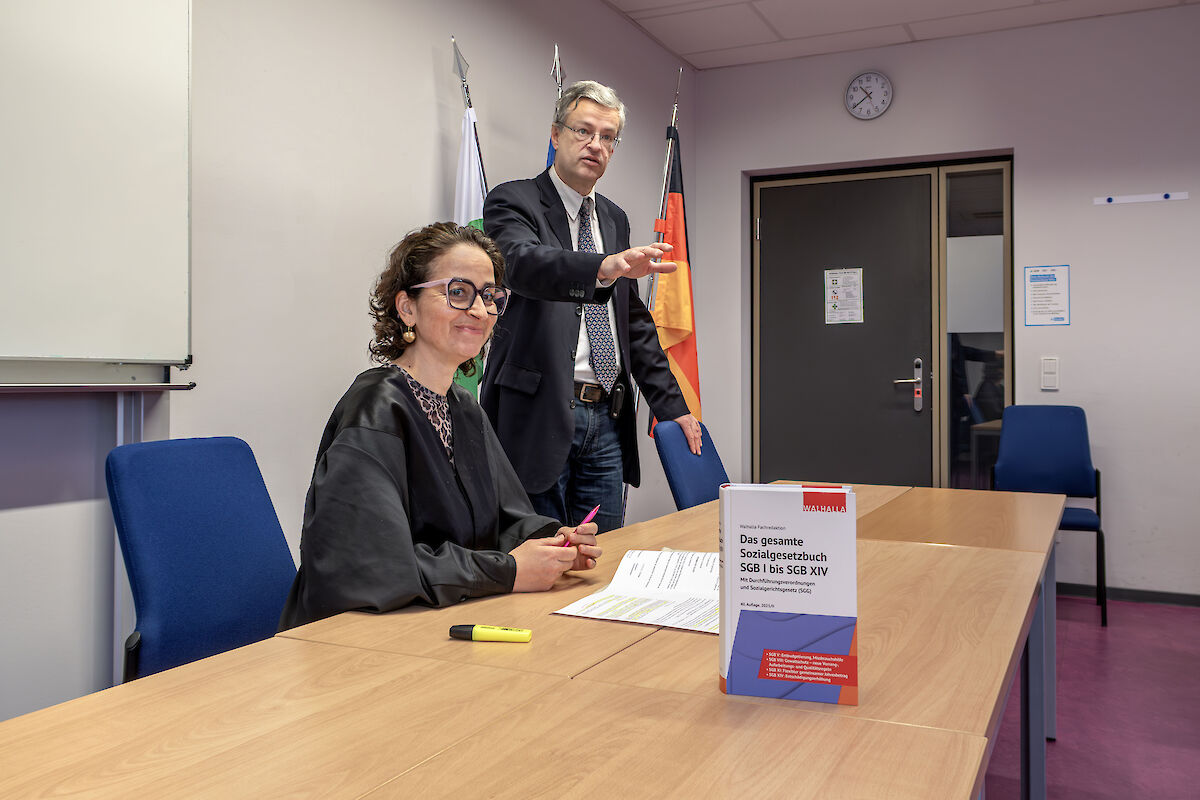

A key advantage of studying at the University of Applied Sciences Dresden is its strong practical orientation.
In addition to theoretical content, you will gain early practical experience – including two integrated internships in the full-time program:
one internship lasting 7 weeks
another internship lasting 13 weeks
In addition, the study program itself works in a very practice-oriented way. For example, role plays are used to simulate counseling sessions or even court proceedings. This helps you learn to act professionally even in challenging situations.
This combination of theory and practice ensures that you not only build knowledge but also develop practical confidence in action.
How the degree feels in everyday life is best understood from the students’ perspective.
Our graduate describes above all the personal learning atmosphere:
“The study groups were individually designed. In smaller groups, we were able to exchange ideas, discuss course content, and engage with professors and lecturers.” – Lisa Marie
The combination of social pedagogy and management is also seen as a major advantage:
“What makes this program special is the combination of social pedagogy and social management in a single bachelor’s degree – that’s exactly why I chose the FHD.” – Ella
And for many, long-term career prospects also play an important role:
“What convinced me most was the management component, as I can easily imagine taking on a leadership position later.” – Nathalie
These insights show that the program is not only convincing in terms of academic content but also in terms of structure and overall design.


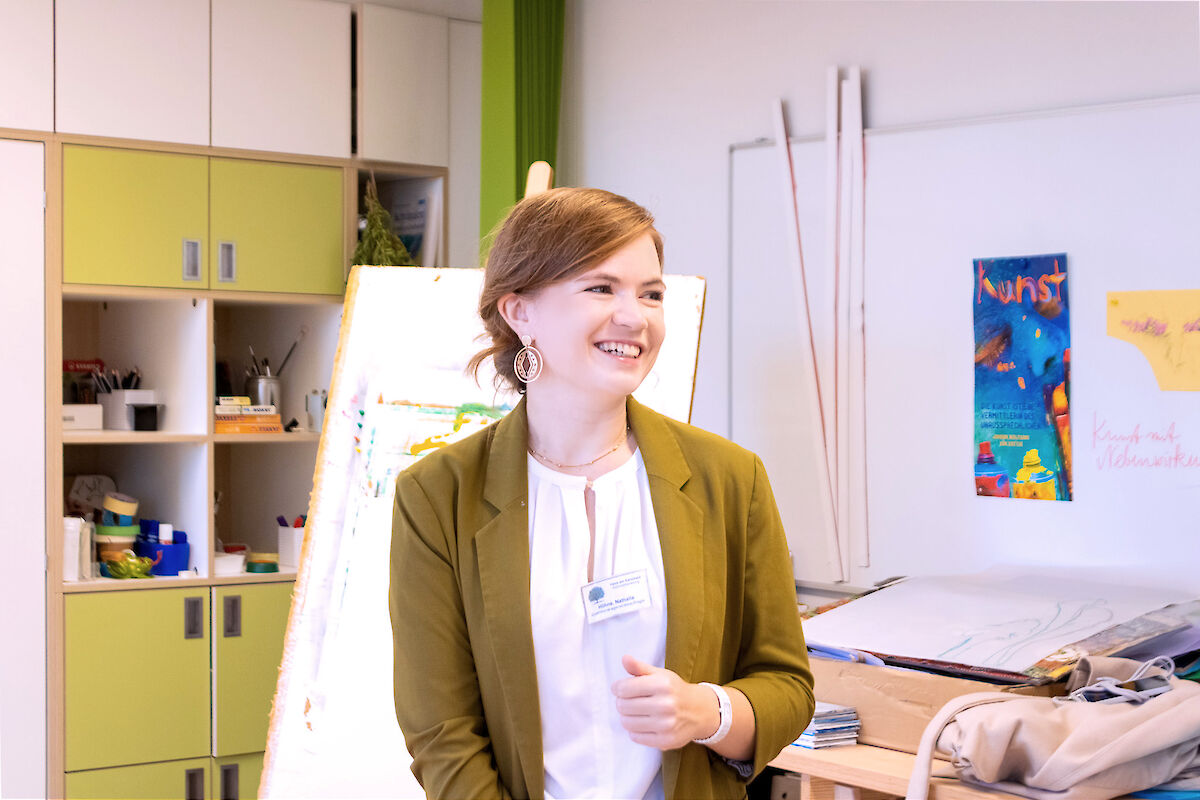
With a degree in Social Pedagogy & Social Management (B.A.), numerous career opportunities open up to you.
You can work both in direct contact with people and take on organizational responsibilities. Typical fields of work include:
child and youth welfare
school social work
open youth work and family support
counseling in special life situations (e.g., addiction or debt counseling)
work in the context of migration and integration
support for people with disabilities
elderly care
A major advantage: in addition to the bachelor’s degree, you also receive state recognition as a social pedagogue/social worker. This is a requirement in many professional fields and significantly improves your entry opportunities.
Thanks to the integrated management component, you also have pathways into leadership roles. With relevant professional experience, you could, for example:
manage a daycare center or social institution
lead projects in the social sector
work in organizational development
If you want to further qualify, you can pursue a master’s degree after the bachelor’s, such as the Master’s program Social Work & Management (M.A.). This opens up additional opportunities in:
leadership positions
quality and human resource management
research and development
Another advantage: graduates of the University of Applied Sciences Dresden benefit from financial discounts for the master’s program.
The University of Applied Sciences Dresden (FHD) offers, with its degree program in Social Pedagogy & Social Management (B.A.), a solid foundation for a successful career.
Small study groups enable intensive exchange and individual support. At the same time, close networking with regional institutions ensures that the program is strongly practice-oriented.
Flexibility also plays an important role: in addition to traditional study models, there are options for part-time study. Under certain conditions, admission is also possible without a high school diploma (Abitur) – an important aspect for many prospective students.
A major advantage of studying at the University of Applied Sciences Dresden is the ability to adapt the program to your personal life situation.
The Social Pedagogy & Social Management (B.A.) program can be completed either full-time or part-time.
The full-time program is particularly suitable for school graduates who want to focus entirely on their studies. The part-time model, on the other hand, is aimed at those who are already in employment, want to further qualify, or are looking to change careers.
Especially in the social sector, this flexibility is a great advantage, as many students already bring practical experience or work in social institutions alongside their studies.
A degree should not fail due to financial or formal barriers. That is why the University of Applied Sciences Dresden not only offers flexible study models, but also various financing options as well as a clearly structured application process.
Financing a degree in Social Pedagogy & Social Management (B.A.) can be based on several pillars. Depending on your personal situation, different options are available:
A key foundation is state support through BAföG. This financial aid supports students during their first degree and only has to be partially repaid later. The current maximum rate is up to €992 per month, with repayment limited to a maximum of €10,010.
Many students also combine their studies with part-time work. Different models are possible:
A mini job offers a flexible way to earn a small income
A midijob allows higher earnings but is partially counted toward BAföG
As a working student, you can work in a field related to your studies and gain valuable practical experience
Scholarships are also an attractive option. Programs such as the Deutschlandstipendium support high-achieving and committed students with €300 per month – independent of BAföG. For people with work experience, the Aufstiegsstipendium can also be relevant.
If further support is needed, student loans or education loans can serve as an additional financing option.
The application process at the University of Applied Sciences Dresden is simple and straightforward.
Online portal: documents such as certificates and CVs are submitted directly via the FHD application tool
No NC pressure: the focus is on personal suitability and motivation, not a fixed numerus clausus
Studying without Abitur: people with vocational training and relevant work experience also have access to academic further education in the social field
Demographic change is sustainably transforming our society – and at the same time increasing the demand for qualified professionals in the social sector.
A degree in Social Pedagogy & Social Management in Dresden offers you the opportunity to actively contribute to this development. It combines academic knowledge with practical experience and opens up diverse career perspectives.
If you are not only looking for a secure job but also want to actively contribute to social development, you will find a solid and future-oriented education here. The program is therefore a strong choice for you if you want to work with people, take responsibility, and at the same time open up new perspectives.
Lina Kröber & Jasmin Kellermann
Kontakt
Campus Straßburger Platz | Raum 108
+49 351 44 45-444
studium@fh-dresden.eu