

Head of the International Office
Paola Yaconis
Kontakt
Campus Straßburger Platz | Raum 120
Tel +49 351 44 45-417
p.yaconis@fh-dresden.eu

Whilst studying for his Master’s degree at the Faculty of Design, Lukas completed a short course at the Edinburgh Futures Institute in Scotland. Living in halls of residence? Not a chance. Without further ado, he converted his car into a campervan and enjoyed his time abroad in a truly extraordinary way, juggling philosophy seminars and future-focused projects! His advice: “Have the courage to go your own way – even if it’s unconventional.” Find out more in his report.
Preparing for my stay in Scotland was quite an adventure and all happened at very short notice. It was helpful to get in touch with the International Office at the partner university early on and to keep in regular contact about the opportunities on offer and course choices. As a standard semester abroad didn’t work out, I was able to find a solution at short notice with the help of the International Office by taking a so-called short course.
After discussing it with my professor, I came up with the idea of converting my car into a mobile campervan: out with the back seat, in with a platform. This created enough space for luggage, equipment and a mattress. An additional power inverter, connected to the car battery, provided enough power for my laptop and mobile phone. At the end of March, the journey could finally begin.
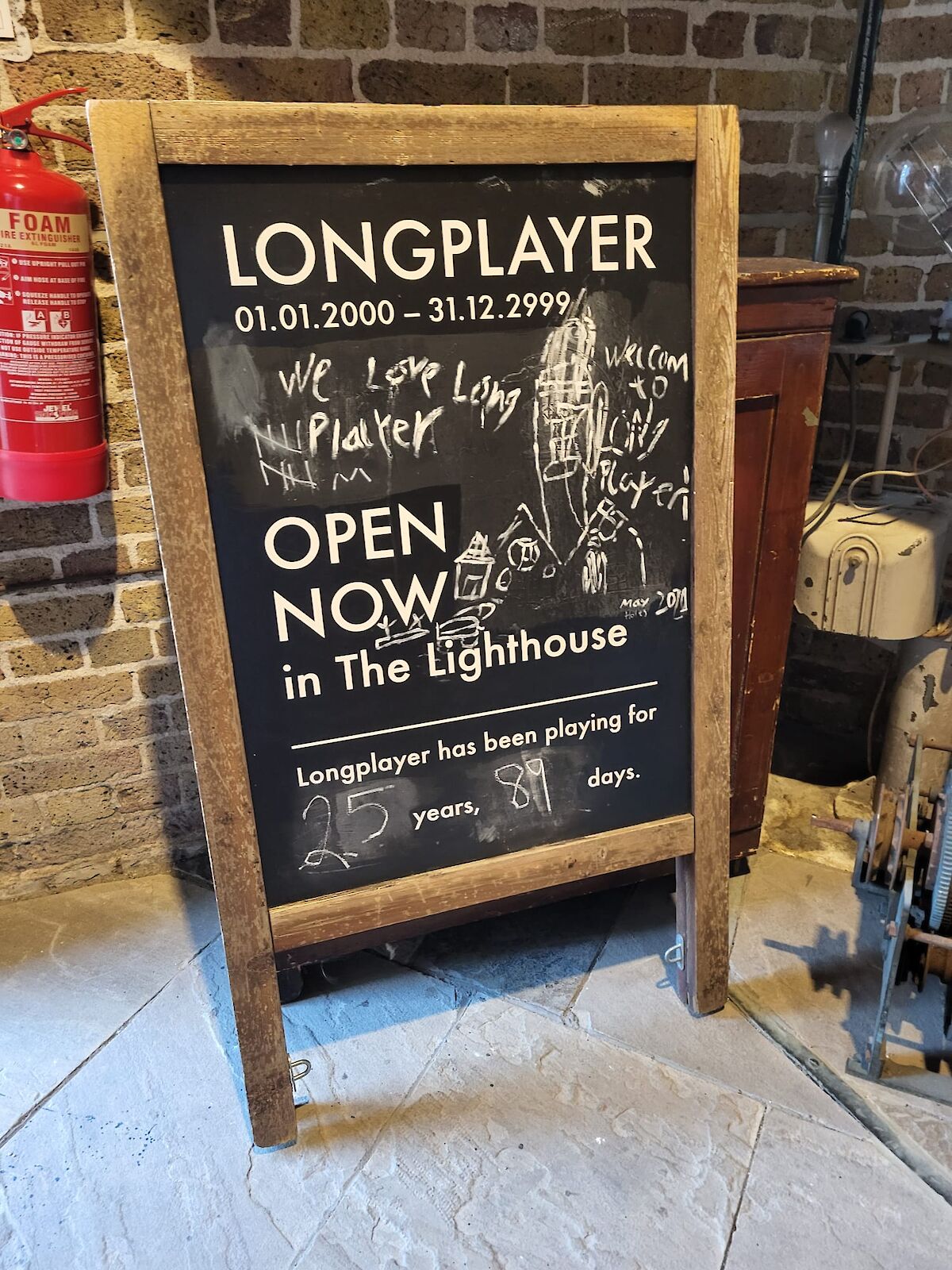
After a few stop-offs in Belgium, I reached the French coast to take the ferry to England. The 2nd LTAP Conference took place in London – a gathering of futurists, long-term thinkers and representatives of international long-term art projects. As a representative of the Wemdinger Time Pyramid, it was a great honour for me to take part and exchange ideas there. Particularly impressive was the visit to the London-based Longplayer project: inside a small lighthouse on the Thames is an algorithmic sound system that generates music for over 1,000 years – without ever repeating itself! The piece began in the year 2000 and will continue to be played until the year 3000. For as long as this music can be heard, it will accompany generations of Londoners and listeners – a truly breathtaking experience.
On the last day of my stay in the British capital, I visited the Science Museum of London, where I was able to see the first prototype of the Clock of the Long Now. Developed by the Long Now Foundation, this device tests a unique clock mechanism that will keep ticking for 10,000 years – a manifestation of long-term thinking.

After my stopover in London, I continued on towards Edinburgh – with a few detours that gave me further insights into England. At Easter, I was finally warmly welcomed by the hills of Edinburgh. The Edinburgh Futures Institute not only offered fascinating talks on future-oriented topics, but also numerous social events that made it easy to make contacts quickly. It was particularly positive that events such as the UtopiaLab made it easy to strike up conversations and network. I can only recommend attending as many of these events as possible – they make settling in so much easier. The short courses in Philosophy & Arts, as well as the research opportunities on XR in Cultural Heritage, have also greatly enriched my own research.
I opted to live in a camper van – a solution that proved to be adventurous, but often ideal too: flexible travel, plenty of park-and-ride options and no rental costs. Working in universities and libraries made my stay much easier. The university buildings had toilet facilities with showers and often shared kitchens. In May, however, I decided to rent accommodation for a month: I found a small room privately in a sort of private hostel in a residential area on the outskirts of town – a pleasant addition to my mobile daily routine.


Studying in Scotland is characterised by a high degree of personal responsibility and critical thinking. The philosophical element of the courses was particularly inspiring – discussions and reflection were strongly encouraged. The lecturers were committed, approachable and open to new perspectives. I particularly enjoyed the creative use of digital media and XR technologies in the cultural sector, which fitted in perfectly with my focus on XR Management & Cultural Design. The collaboration with the University of Glasgow and the ‘Museums in the Metaverse’ project was particularly enriching.
Scotland made a deep impression on me with its combination of history, nature and modern culture. Whether you’re strolling through medieval alleyways in Edinburgh or hiking along the west coast – the atmosphere is unique. A weekend trip to the Highlands was an absolute highlight. The people are friendly, helpful and proud of their cultural identity. The weather is changeable, but the landscape makes up for everything.
Student life is vibrant and diverse. There’s plenty on offer – especially for outdoor enthusiasts and those interested in art and history. Even smaller towns and rural areas boast a surprisingly rich cultural life. Academic English was easy to understand, although the Scottish accent posed a bit of a challenge at first.
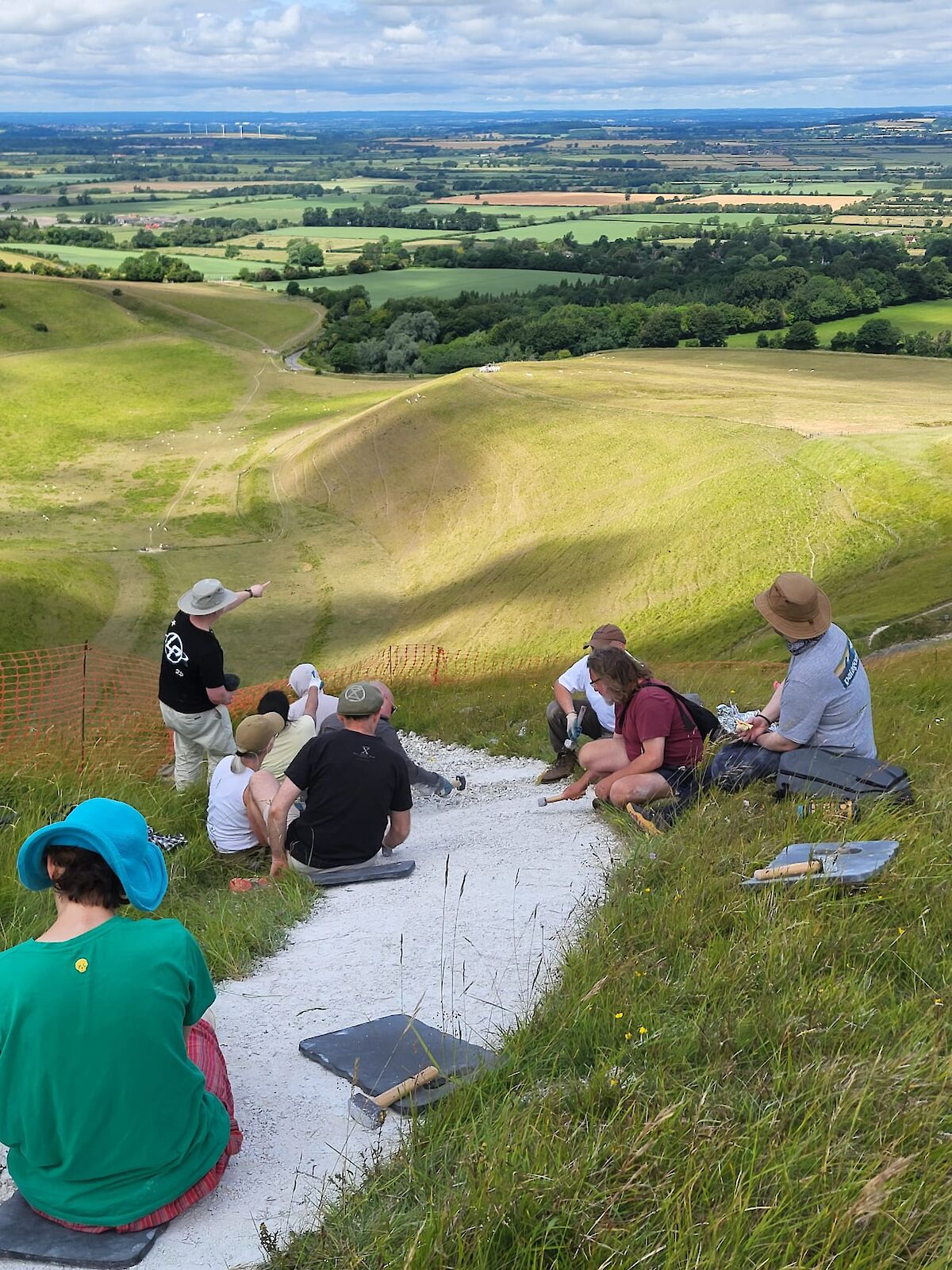


On the way back home – taking the ferry to France again – I made a detour to Uffington in the south of England. There, one last special experience awaited me: I was given the chance to help restore the ancient chalk drawing, the Uffington White Horse. This Celtic chalk horse, which is over 3,000 years old, is traditionally repainted every year – although this task has been taken more or less seriously by the local population over the years – and the horse has survived the centuries.
At the spot where, according to legend, St George is said to have slain the dragon, no grass grows to this day – only the gleaming white limestone remains visible. To preserve this whiteness, limestone blocks must be smashed to dust with a hammer and packed down, just as they were in days gone by. This is how the clean lines that form the aerial view of the horse are created. This activity symbolically connected me with the generations before me – a quiet, impressive conclusion to my journey. I am very grateful to have had such an extraordinary experience.
My stay in Scotland was extraordinary in every respect – an adventure combining research, philosophy and freedom. Not only did I improve my English, but I also gained new ways of thinking, cultural perspectives and friendships. Particularly formative was my encounter with long-term thinking in theory and practice – from Longplayer and the Edinburgh Futures Institute to the White Horse of Uffington. These experiences have profoundly deepened my understanding of time, sustainability and cultural responsibility.
My advice to future students: have the courage to forge your own path – even if it’s unconventional. A period abroad isn’t a ready-made template, but a journey that takes shape as you go along – and that’s exactly what makes it so valuable.
Paola Yaconis
Kontakt
Campus Straßburger Platz | Raum 120
Tel +49 351 44 45-417
p.yaconis@fh-dresden.eu