

Prof. Dr. phil. Markus Andrä
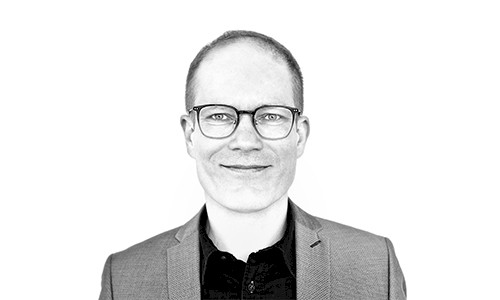
Programme Director for Social Pedagogy & Management (BA) – part-time
Professor of Social Work
Campus Straßburger Platz | Raum 126
Tel +49 351 44 45-433
m.andrae@fh-dresden.eu
Academic Profile
Prof. Dr. phil. Markus Andrä has been teaching and conducting research at Dresden University of Applied Sciences (FH Dresden) since March 2018. His main areas of expertise include early childhood education, the construction of masculinity, and gender-sensitive pedagogy. In particular, his work focuses on the role of male professionals in early childhood education interactions, issues of diversity, anthropological foundations, and approaches to promoting resilience. Drawing on his diverse experience in academic research, higher education teaching, professional development, and practical work in child and youth services, he combines sociological and developmental-psychological perspectives with practice-oriented approaches to social work and social pedagogy.
Academic and Professional Career
From 1994 to 1998, Prof. Dr. phil. Markus Andrä studied Social Work / Social Pedagogy at the Protestant University of Applied Sciences Dresden, graduating with a degree in Social Pedagogy (Diplom-Sozialpädagoge). In 2017, he completed his doctorate (Dr. phil.) at Technische Universität Dresden with a dissertation entitled The Construction of Masculinity in Early Childhood Education Interactions.
Markus Andrä began his professional career by providing counselling and support to people at risk of homelessness during his professional recognition year at the Dresden Social Welfare Office (2000–2001). From 2001 to 2006, he subsequently worked as a social pedagogue in open youth work within a social-diaconal setting. From 2007 to 2010, he worked as an educator and group leader of an integration group at a Diakonie Stadtmission Dresden childcare centre.
From 2010 to 2014, he worked as a research associate at the Centre for Research, Continuing Education and Consulting at the Protestant University of Applied Sciences Dresden. From 2011 onwards, he also held various teaching positions at universities in Germany and Austria. Prior to his appointment at FH Dresden, he worked as a lecturer in the Department of Social Work at the DRK Bildungswerk Sachsen gGmbH vocational college from 2015 to 2017.
Research Areas and Interests
Prof. Dr. Markus Andrä’s research focuses primarily on gender-specific interactions in early childhood education and care (ECEC) settings, micro-level analyses of video data, and the role of male early childhood educators in the context of diversity and professional practice.
His current research projects include the evaluation of the Straßenschule (“Street School”) operated by Treberhilfe Dresden e.V. on behalf of the Youth Welfare Office of the City of Dresden, as well as his involvement in the international research project Cross-cultural Reflexivity and Gender-sensitive Teacher Training in Early Childhood Education and Care.
He is also involved in an international interview study conducted by the EECERA Special Interest Group “Gender”, focusing on the career trajectories of male professionals in early childhood education.
Teaching
Prof. Dr. Markus Andrä’s teaching focuses in particular on the following areas:
- Anthropological foundations
- Fundamentals of communication and interaction
- Social work as an academic discipline and profession
- Casework in social pedagogy
- Biographical approaches to coping with life challenges and methods of promoting resilience
He regularly incorporates findings from his research directly into his teaching, particularly in the areas of communication, interaction, and coping with life challenges. He is also active in continuing professional education, addressing topics such as educational assessment and gender-sensitive pedagogy.
Projects
Experiential Learning Project at the Dresden Long Night of Science (2014):
“Without Match Day, There Are Only Working Days” – A contribution exploring religious dimensions and references in football.
Selected Publications
Andrä, M. (2019): Die Konstruktion von Männlichkeit in kindheitspädagogischen Interaktionen. Eine videographische Studie in Kindertagesstätten. Wiesbaden: VS Verlag.
Brandes, H.; Andrä, M.; Röseler, W.; Schneider-Andrich, P. (2016): Macht das Geschlecht einen Unterschied? Ergebnisse der „Tandem-Studie“ zu professionellem Erziehungsverhalten von Frauen und Männern. Opladen: Verlag Barbara Budrich.
Andrä, M. (2020): Male Childcare Workers as Promoters of Diversity. Conclusions from a Qualitative Analysis in German ECEC Institutions. In: Early Years: An International Research Journal, 40 (1), pp. 82–94.
Brandes, H.; Andrä, M.; Röseler, W.; Schneider-Andrich, P. (2015): Vergleich männlicher und weiblicher Fachkräfte in der Frühpädagogik auf Basis einer standardisierten pädagogischen Situation. Ergebnisse der „Tandem-Studie“. In: Frühe Bildung, 4 (2), pp. 102–109.
Andrä, M. (2019): Ein videographischer Zugang zu einem mehrdimensionalen Phänomen: Geschlecht als mikrosoziale Identitätskonstruktion. In: M. Kubandt & J. Schütz (Eds.), Gerne Geschlecht. Opladen: Verlag Barbara Budrich.
Selected Presentations and Conference Contributions
Andrä, M., Schneider-Andrich, P., & Brandes, H. (2013). “Ich habe keine Erwartungen an ihn als Mann …” Männliche und weibliche Fachkräfte im Vergleich. TPS. Leben, Lernen und Arbeiten in der Kita, 2013 (4), 12–15.
Andrä, M. (2013). Between Professionalism and Authenticity. A New Perspective on Men and Women Working Together in German ECE Teams. EECERA Annual Conference, Tallinn, Estonia.
Brandes, H., Andrä, M., Röseler, W., & Schneider-Andrich, P. (2013). Männer in Kitas – Was machen sie anders und wie profitieren die Kinder von ihnen? Ergebnisse aus der „Tandem-Studie“ zu professionellem Erziehungsverhalten von Männern und Frauen. Frühe Kindheit, 2013 (5), 38–43.
Brandes, H., Andrä, M., Röseler, W., & Schneider-Andrich, P. (2015). Vergleich männlicher und weiblicher Fachkräfte in der Frühpädagogik auf Basis einer standardisierten pädagogischen Situation. Ergebnisse der „Tandem-Studie”. Frühe Bildung, 4 (2), 102–109.
Brandes, H., Andrä, M., Röseler, W., & Schneider-Andrich, P. (2016). Does Gender Make a Difference? Results from the German “Tandem Study” on the Pedagogical Activity of Female and Male ECE Workers. EECER-Journal, 23 (4), 315–327.
Brandes, H., Andrä, M., Röseler, W., & Schneider-Andrich, P. (2016). Macht das Geschlecht einen Unterschied? Ergebnisse der „Tandem-Studie“ zu professionellem Erziehungsverhalten von Frauen und Männern. Opladen: Verlag Barbara Budrich.
Andrä, M., Brandes, H., Röseler, W., & Schneider-Andrich, P. (2016). Erzieherinnen und Erzieher zwischen pädagogischer Professionalität und geschlechtlicher Authentizität – Empirische Ergebnisse und praktische Schlussfolgerungen der Tandem-Studie. In W. Weegmann & J. Senger (Eds.), Männer in Kindertageseinrichtungen. Theorien – Konzepte – Praxisbeispiele (pp. 73–85). Stuttgart: Kohlhammer.
Brandes, H., Andrä, M., Röseler, W., & Schneider-Andrich, P. (2018). Wie kommt das Geschlecht ins Spiel? Wechselwirkungen zwischen dem Geschlecht der Kinder und dem der pädagogischen Fachkräfte. Ergebnisse der Tandem-Studie. In N. Hover-Reisner, M. Fürstaller, & B. Lehner (Eds.), Vielfalt in der Elementarpädagogik. Vienna: Wochenschau-Verlag.
Andrä, M. (2018). Gender Socialisation in ECE and the Significance of Male Workers. Presentation at the EECERA Annual Conference, Budapest, Hungary.
Andrä, M. (2019). Die Konstruktion von Männlichkeit in kindheitspädagogischen Interaktionen. Eine videographische Studie in Kindertagesstätten. Wiesbaden: Springer VS.
Professional Engagement
Member of the German Association of Social Work (Deutsche Gesellschaft für Soziale Arbeit)
Member of the EECERA Special Interest Group “Gender”
Reviewer and expert reviewer, including peer review for Sex Roles (2014)